

In modern industrial manufacturing, tolerance is a critical parameter that ensures reliability, stability, and manufacturability. Whether in mechanical components, automotive parts, electronic assemblies, or cable protection materials, well-defined tolerances form the foundation of a stable and functional product system.
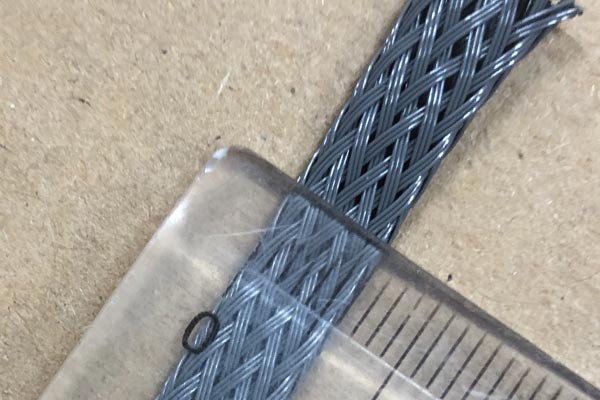
What Is Tolerance and Why Does It Matter?
Tolerance refers to the acceptable deviation from a nominal dimension or performance value—such as ±0.05 mm dimensional variation or ±5% material thickness variation.
Proper tolerance control ensures:
Parts fit together correctly
Stable and cost-efficient production
Consistent material performance
Long-term durability and safety
Without proper tolerance design, even high-quality materials can fail prematurely in real applications.
Why Do Different Industries Require Different Tolerance Levels?
Precision Engineering & Electronics: Ultra-Tight Tolerances
Applications such as sensors, connectors, and PCB parts require extremely tight tolerances because:
Minor errors cause electrical mismatch
Limited installation space
High-frequency components react to micro variations
Automotive & Aerospace: Balanced Precision and Durability
These sectors deal with temperature changes, vibrations, and mechanical loads—requiring a balance between tight tolerances and structural durability.
Typical tolerance: ±0.05 mm to ±0.5 mm.
Cable Protection Materials: Functional Tolerances
For braided sleeving, conduits, and insulation sleeves, tolerance is based on functional requirements such as:
Inner diameter variation
Wall thickness consistency
Expansion and elasticity tolerance
Effects of Overly Tight or Overly Loose Tolerances
Risks of Overly Tight Tolerances
Higher production cost
Lower manufacturing efficiency
Higher scrap rate
Tight tolerance does not guarantee better performance
Risks of Overly Loose Tolerances
Poor fit
Reduced protective function
Higher failure probability under stress
Shortened product life
How to Determine the Right Tolerance Range
Engineers typically evaluate:
Functional requirements
Material behavior
Manufacturing capability
Environmental conditions
Cost-to-risk ratio
The right tolerance is not “as tight as possible” but “tight enough to ensure function while remaining manufacturable.”