
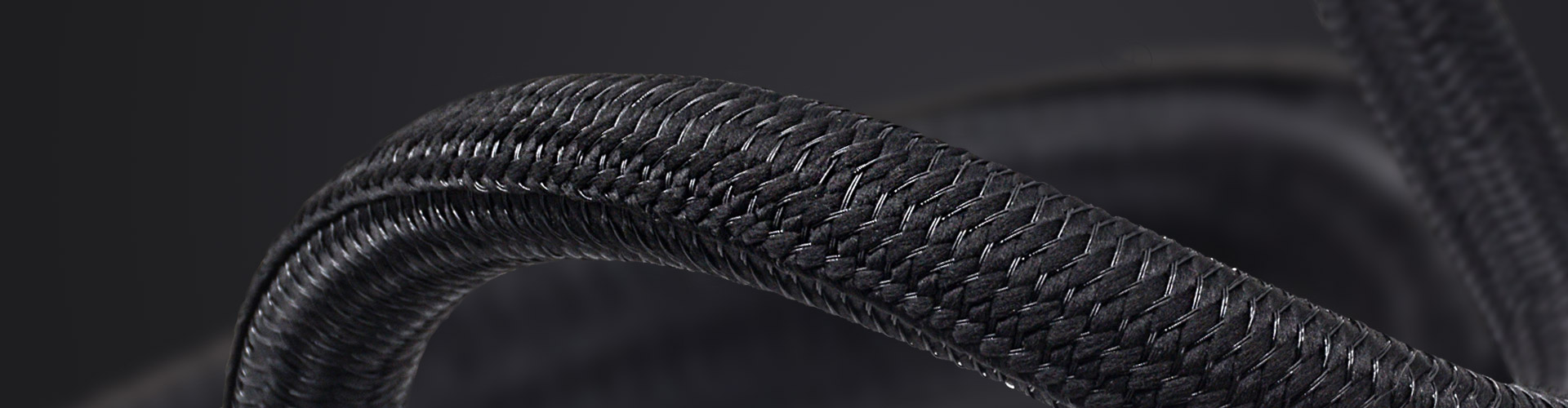
In modern industrial system engineering, cable protection materials—such as braided sleeves, corrugated conduits, heat-shrink tubing, and insulation jackets—are far more than simple accessories to wire harnesses. They are essential components that ensure the reliability and stability of electrical systems. Electrical harnesses in commercial vehicles, industrial machinery, railway systems, and energy equipment are continuously exposed to vibration, temperature fluctuations, oil contamination, moisture, and mechanical abrasion. The role of protection materials is to extend harness service life, reduce maintenance frequency, and significantly improve the overall mean time between failures (MTBF). Consequently, material selection must be guided by comprehensive Environmental Risk Assessments (ERA), Life Cycle Analysis (LCA), and industry-specific standards in order to achieve system-level reliability.
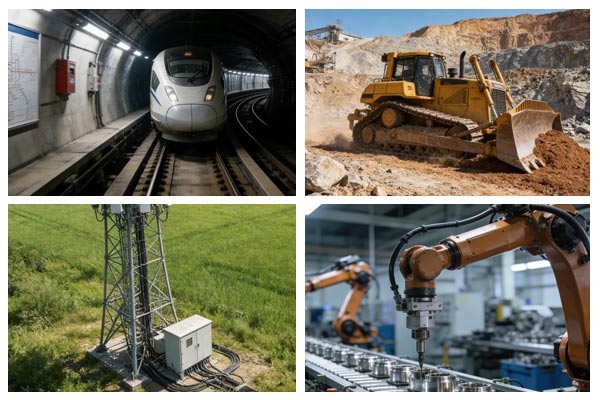
In commercial vehicles and construction machinery, wire harnesses are often installed in harsh environments such as engine compartments, chassis structures, and external mechanical interfaces. These conditions require materials with sustained high-temperature resistance (125–150°C), excellent abrasion resistance, and strong vibration tolerance to withstand NVH-induced tension and oscillation. They must also resist degradation from oil, diesel, and coolant exposure. As a result, PA6/PA66 braided sleeves, flame-retardant PET sleeves, and nylon corrugated conduits are commonly used. Each material must undergo PV (Performance Verification), EMC testing, and rigorous engineering validation before being approved for vehicle integration.
In contrast, cable protection requirements for railway systems, high-voltage energy equipment, and communication infrastructure place greater emphasis on flame retardancy, long-term environmental resistance, and extended material life. These applications must comply with standards such as EN45545, UL94 V0, and NFPA 130, and demand service lifetimes of 25 to 30 years. Materials must also offer UV resistance, humidity and heat resistance, salt spray resistance, and EMC compatibility. Traditional PET sleeves often cannot meet these demanding requirements; instead, flame-retardant PET/PO blends, aluminum-foil shielding braided sleeves, and fluoropolymers such as FEP and PTFE are adopted. In such scenarios, cable protection materials must perform at the level of “semi-structural components,” rather than simply serving aesthetic or light-protective functions.
In intelligent manufacturing and robotic applications, cable protection faces challenges related to dynamic bending and high-frequency motion. Robotic arms and automated equipment impose stringent requirements on material flexibility and bending fatigue life, often requiring millions of cycles. Materials must resist dust, cutting fluids, and metal debris impact while preventing micro-cracks from friction that may lead to signal attenuation. Ultra-flexible PET sleeves, elastic TPE conduits, and high-density nylon braided materials are frequently used, often in combination with cable clamps, serpentine tubes, and robotic drag chains to form a comprehensive dynamic harness system.
Compared with industrial applications, consumer electronics and home appliances prioritize aesthetic consistency, lightweight construction, and large-scale production uniformity. While basic abrasion resistance is still required, these fields demand precise consistency in color, texture, and braid density to meet finished-product design expectations. Materials must comply with international safety certifications such as UL and VDE, as well as environmental standards including RoHS and REACH. High manufacturing precision, consistent braid tightness, minimal length deviation, and stable flexibility are critical to overall product quality and user experience.
Cable protection materials exhibit distinct technical requirements across different industrial sectors. From a system engineering perspective, their design and selection must consider environmental conditions, expected service life, mechanical and chemical stresses, and applicable industry standards. High-temperature endurance and vibration resistance are central to commercial vehicles and construction machinery; flame retardancy and long-term durability are essential for railway and energy systems; dynamic flexibility and bending fatigue life are key to robotics and automation; and aesthetic consistency with regulatory compliance defines consumer electronics applications. Understanding these differences enables engineers to make informed decisions during material selection and system design, ultimately improving the reliability and cost-effectiveness of entire electrical systems.